Technical debt can quietly slow down development, reduce code quality, and increase complexity over time. Using the Throughput Dashboard and monitoring specific metrics, you can identify early warning signs of technical debt and take action before it impacts team velocity and productivity. Here’s how:
Step 1: Monitor Key Metrics for Early Signs of Technical Debt
-
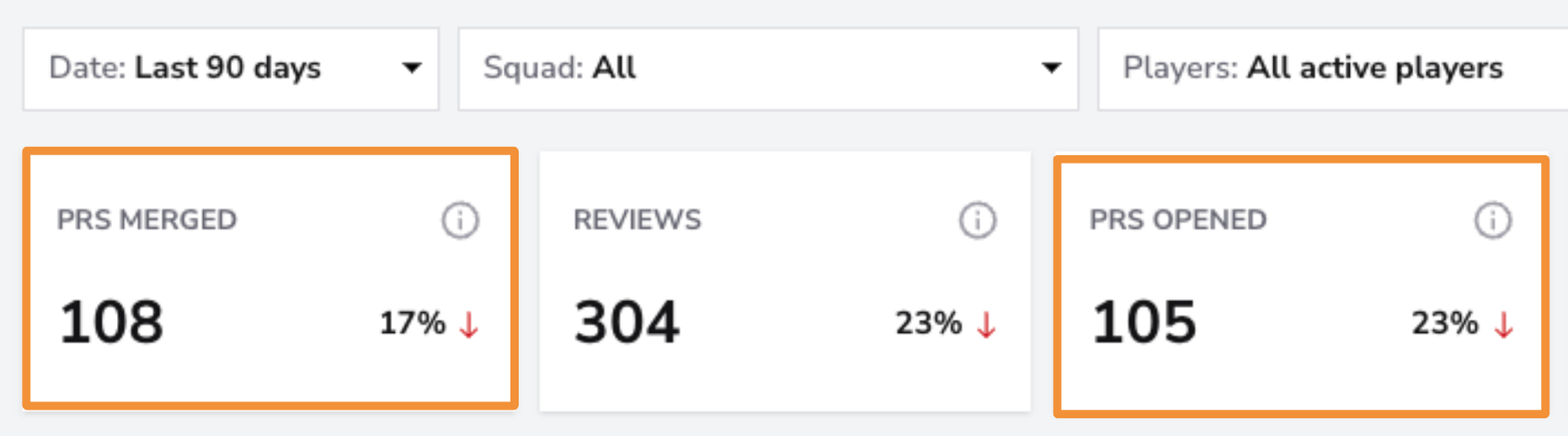
PRs Opened vs. PRs Merged-What to Look For: Compare the number of PRs opened to the number of PRs merged over time. To obtain a more granular view, examine these numbers across different time periods and squads. A widening gap—where more PRs are opened than merged—may indicate a potential slowdown, often due to technical debt making it harder to complete work.
-
Action: If PRs merged are decreasing, consider discussing with the team to uncover challenges related to code complexity or dependencies that might be slowing them down.
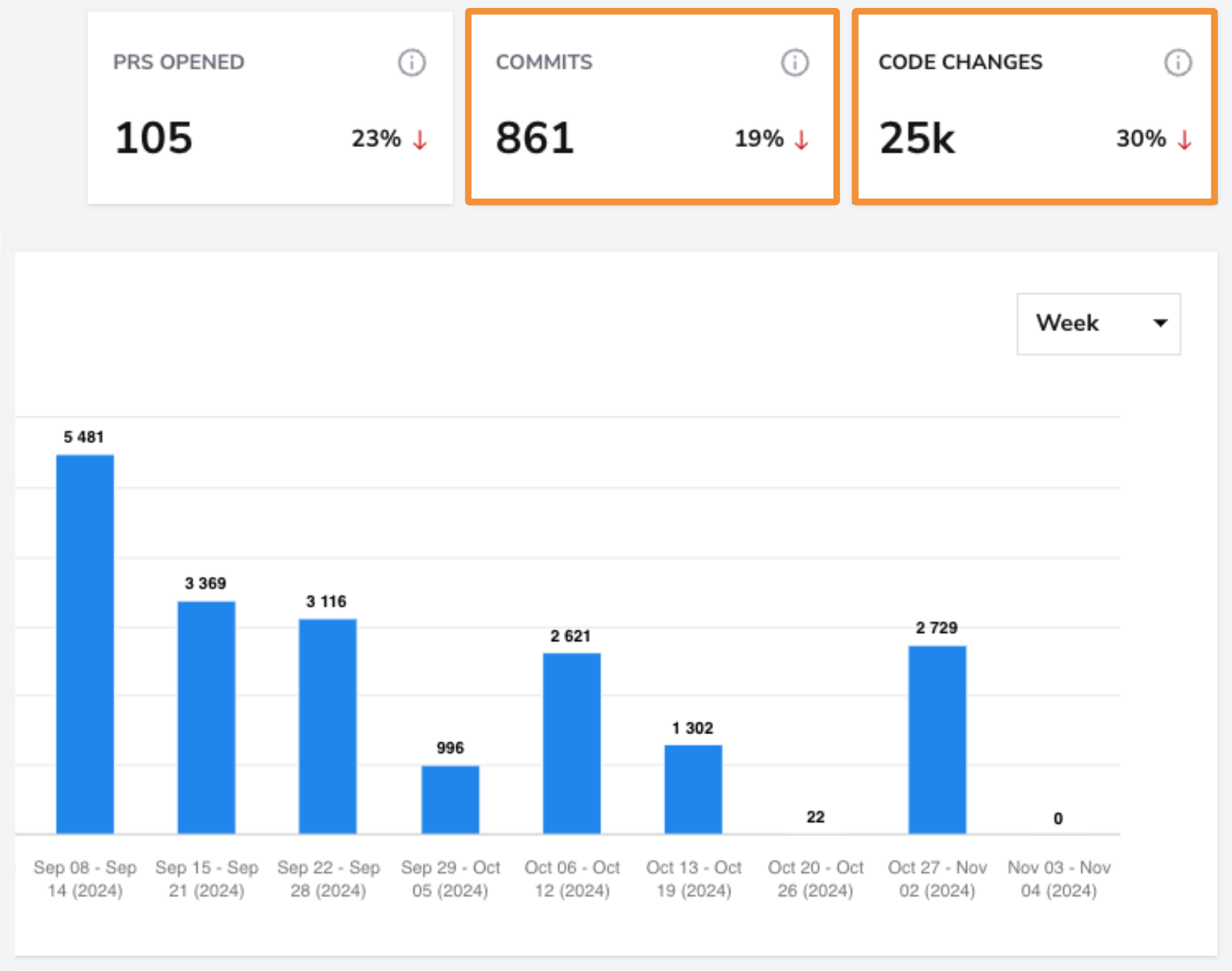
- Commits and Code Changes-What to Look For: A decrease in the number of commits and total lines of code changed can indicate reluctance or difficulty in making updates, a common symptom of technical debt. Fewer commits and code changes suggest that the codebase may be becoming unwieldy or hard to modify. The example below shows a declining number of code changes and commits.
- Action: Encourage more frequent, incremental commits to make changes manageable. If code changes remain low, consider allocating time for refactoring or addressing areas of high complexity.
- Reviews Completed-What to Look For: Declining review numbers may indicate that code reviews are being deprioritized, often because the codebase has become difficult to navigate or too complex to review efficiently.
- Action: Reinforce the importance of reviews to maintain quality. If fewer reviews are being completed, explore why – it may be a sign that code complexity is increasing, discouraging reviewers.
- Cross-Reference with PR Cycle Time-What to Look For: A prolonged PR Cycle Time, especially in the “Coding Time” and “Review Time” stages, often signifies that technical debt is impacting productivity. If PRs are staying open longer, this suggests that the team may be facing challenges in completing or reviewing them due to a cumbersome codebase.
- Action: Check for increasing times in each stage, especially in Coding and Review Time. If PRs are taking longer to close, discuss with the team to identify specific bottlenecks and allocate time for technical debt reduction.
Step 2: Combine Metrics for Deeper Insights
-
Velocity and Quality Check:A simultaneous decline in PRs Merged, Commits, and Reviews is a red flag that productivity and code quality may be suffering due to accumulating technical debt.
-
PR Cycle Time Trends: If you see an increase in PR Cycle Time alongside declining throughput, this reinforces the likelihood that technical debt is slowing down your process.
Conclusion
Using the Throughput Dashboard to monitor metrics like merged PRs, commits, reviews, and PR cycle time can reveal early signs of technical debt. By identifying these trends early and proactively addressing them, your team can maintain productivity, improve code quality, and ensure a smoother development process.