Pull Request Insights
Understanding your pull request workflow is the first step to improving delivery speed, quality, and predictability. The Pull Request Insights in DevStats help you monitor how pull requests move through each stage of development — from creation to merge — and uncover where delays or inefficiencies occur.
Analyze Pull Request Cycle Time
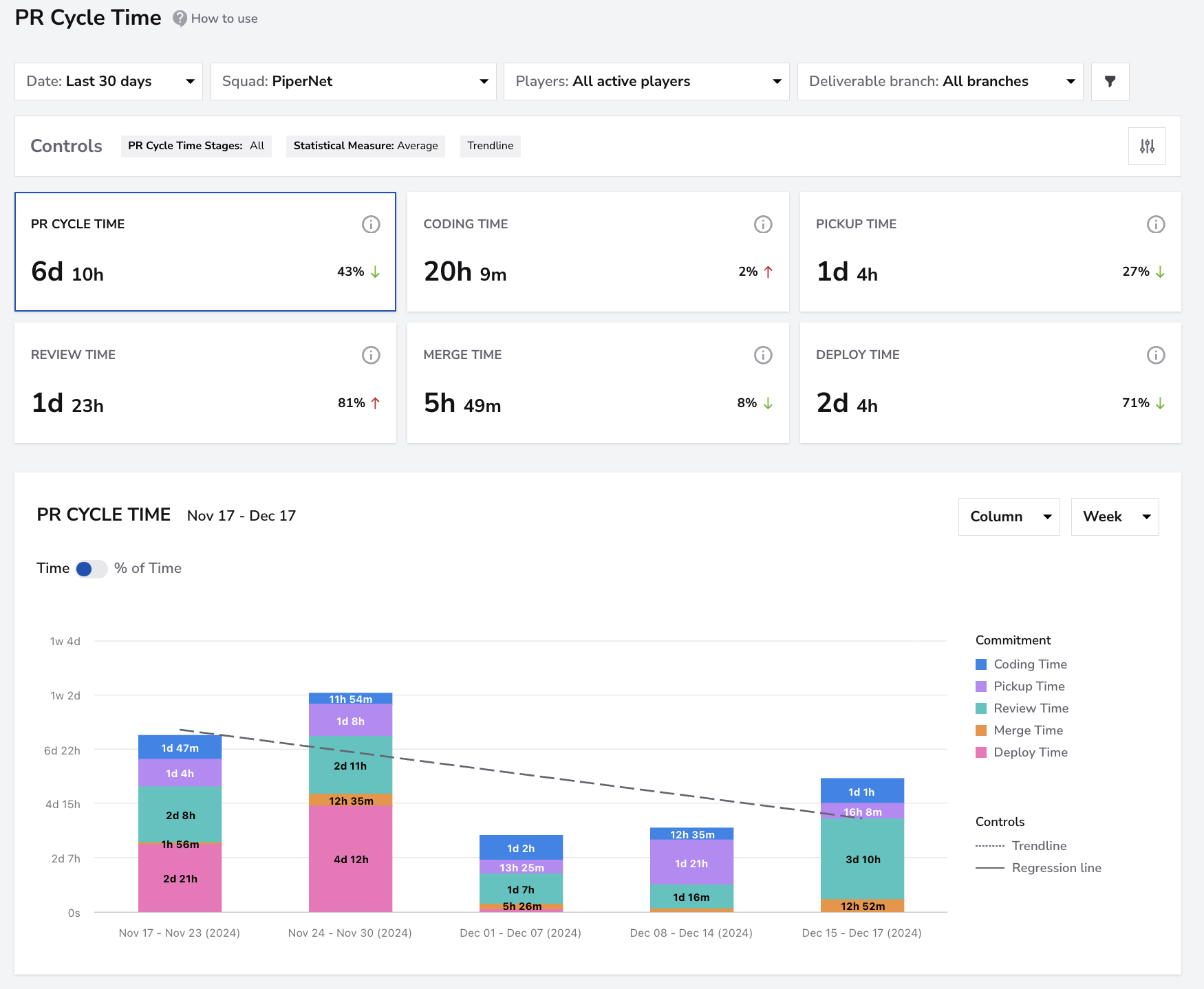
The Pull Request Cycle Time Trend chart shows how long it typically takes your team to close pull requests and how this evolves over time. If PRs are closed quickly, the trendline moves down. If several PRs stay open for multiple days, it starts to rise — indicating accumulating work in progress or delayed reviews. A healthy target is to close most pull requests within 1–5 days, depending on team size and release cadence.
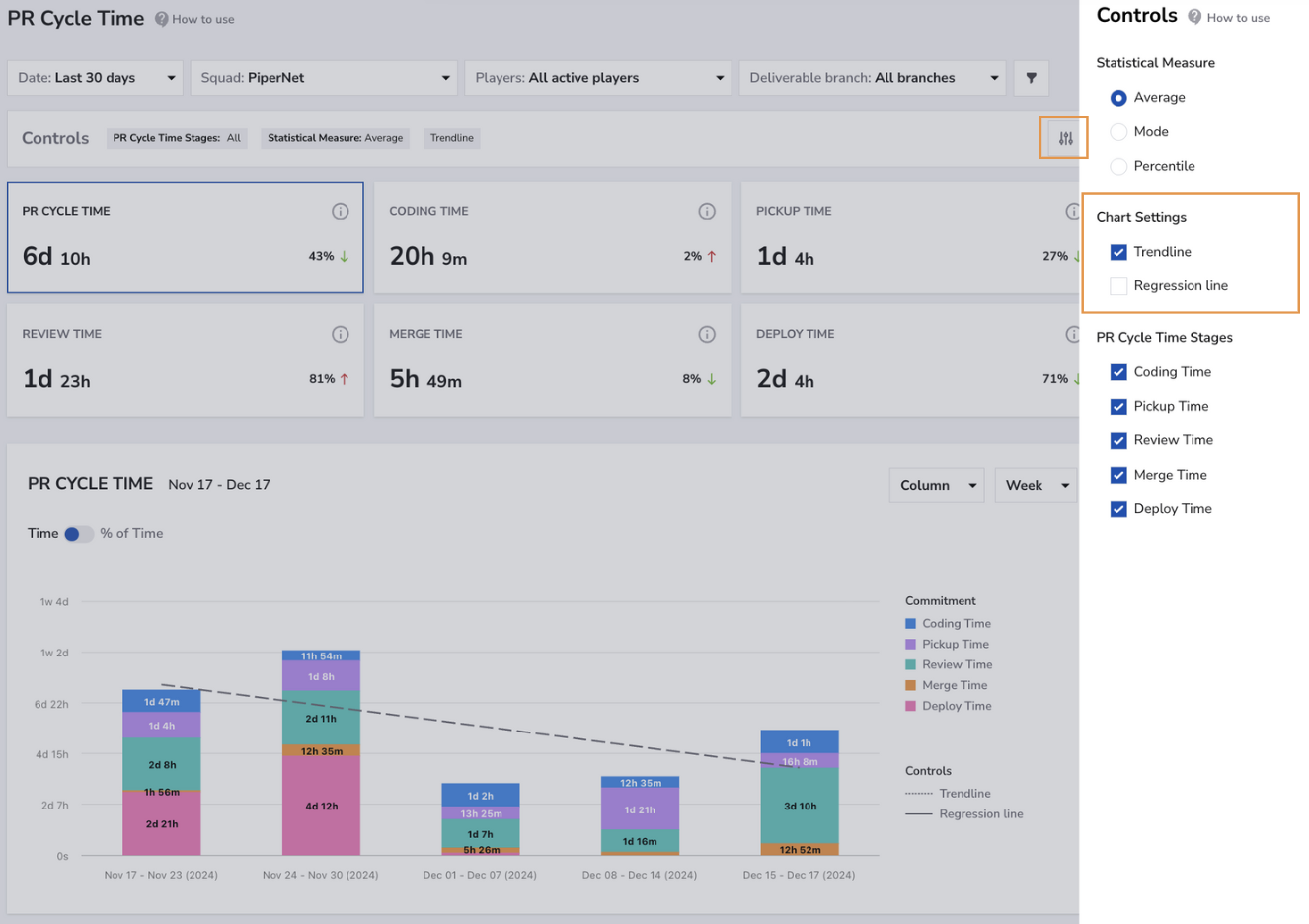
You can select the trendline by clicking on the control panel.
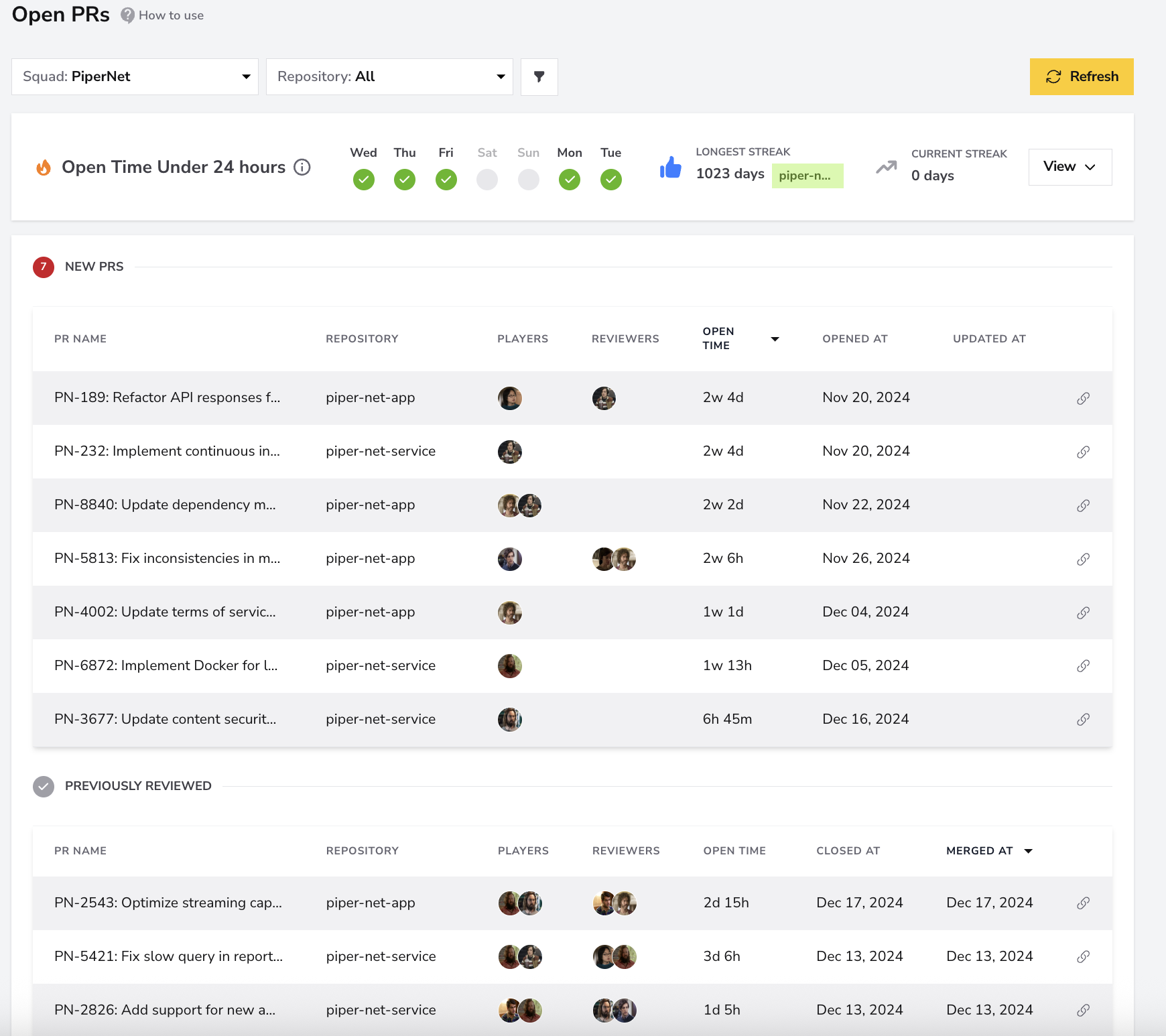
Monitor Open Pull Requests
The Open PRs Dashboard helps teams track all currently active pull requests across repositories and squads. Each row displays key details such as PR name, repository, author, assigned reviewers, and how long the PR has been open. You can quickly identify long-running PRs, see who is responsible for review, and act on those that have been waiting too long.
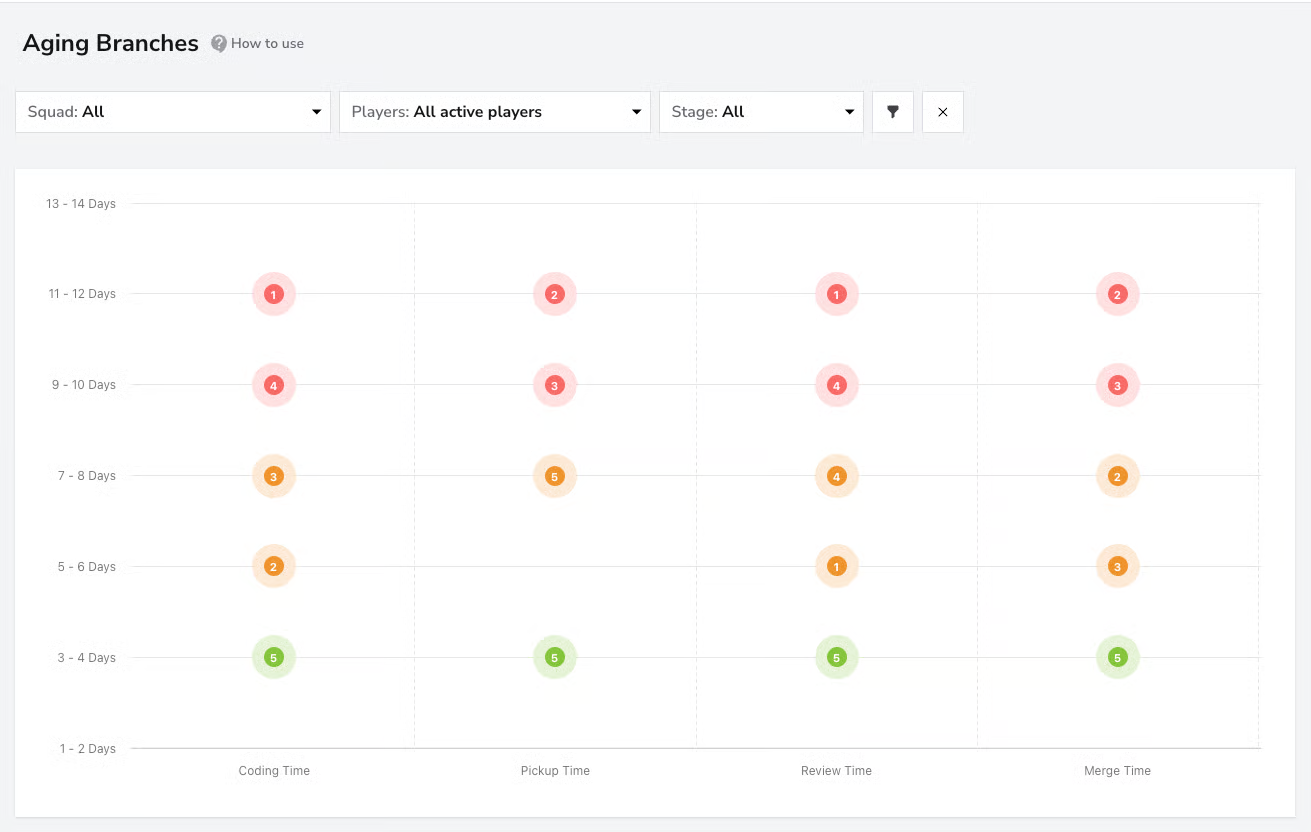
Spot Bottlenecks with Aging Branches
Use the Aging Branches Report to identify in-progress branches and see where work is getting stuck. Branches are shown by stage (Coding, Review, Merge), with color intensity indicating how long they’ve remained there. Clicking on a branch reveals how many days it has been open and its current stage, helping teams act early before work becomes stale.
Refine with Filters
Use the filters at the top of the dashboard to refine your analysis by squad, player, or date range. Filters apply across all charts and tables, allowing you to isolate specific workflows or contributors and better understand where delays occur.
Summary
Once you’ve identified trends or recurring bottlenecks, use these insights to guide improvement actions:
- Review faster, in smaller batches. Large PRs delay feedback and increase review time.
- Limit open PRs. Too many in progress can overwhelm reviewers and reduce focus.
- Set realistic cycle time targets. For example, close PRs within 7 days or less.
- Define review SLAs. Encourage reviews within 24–48 hours to maintain momentum.
You can also compare your team’s performance with industry benchmarks in the Snapshot section, or use DORA metrics to see how improving PR flow impacts your overall delivery speed.
Continuous visibility into pull request insights empowers teams to deliver faster, collaborate more effectively, and maintain a healthy development rhythm