The PR Cycle Time Dashboard offers insights into the efficiency of your pull request process, helping you reduce delays and streamline workflows. Here’s a step-by-step guide to making the most of this dashboard.
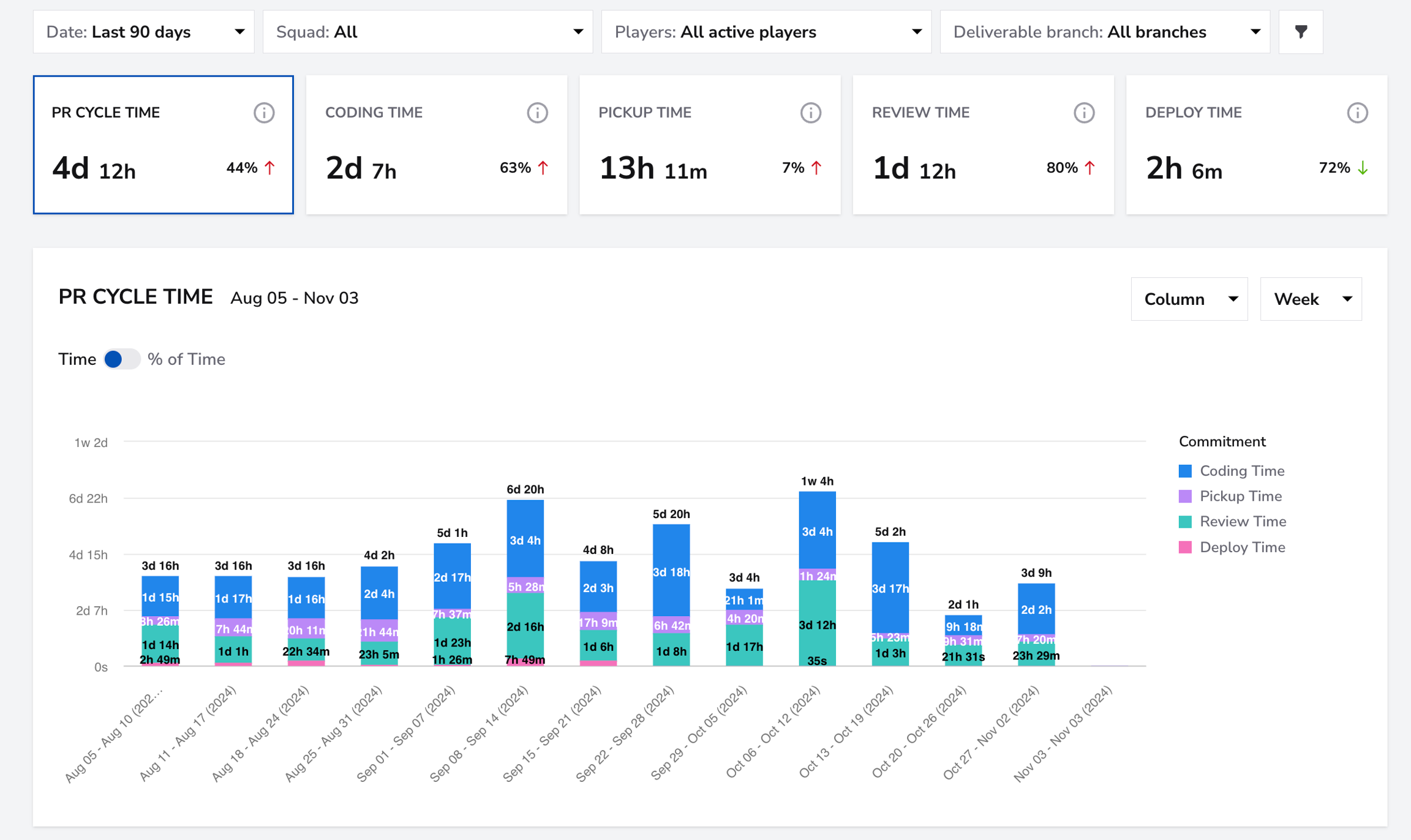
Step 1: Monitor PR Cycle Time and Its Components
-
How: Regularly review the total PR cycle time and its breakdown by stage: Coding Time, Pickup Time, Review Time, and Deployment Time.
-
What to Look For:Identify which stages have the longest times and target those areas for improvement. For example, a long Review Time might indicate a need for better review practices or additional reviewers.
Step 2: Identify Bottlenecks
-
How: Use the stage breakdown to detect where delays commonly occur.
-
What to Look For:Consistently high times in stages like Pickup Time could suggest issues with reviewer availability. Consider strategies like automated notifications or adjusting priorities to improve response times and reduce these bottlenecks.
Step 3: Break Down Large Tasks
-
How: Encourage breaking down large PRs into smaller, manageable pieces that can be coded, reviewed, and deployed more quickly.
-
What to Look For: Long cycle times often signal that tasks are too large. Smaller PRs, which allow focused, incremental changes, can shorten cycle times, reduce the risk of errors, and improve code quality.
Conclusion
To optimize your PR cycle time, start by setting clear improvement goals for each stage of the PR process. Establish benchmarks and aim to reduce times in areas like Review Time by refining review processes or allocating additional reviewers. Track your progress over time, as improvements in each stage should lead to a more efficient overall cycle time.
Additionally, trends should be regularly analyzed using the bar chart to observe weekly variations in cycle times. Look for patterns, such as gradual improvements that signal successful adjustments or recurring delays that highlight areas for further optimization. These steps will help your team achieve a streamlined, effective PR workflow.