The Issue Cycle Time Dashboard provides valuable insights into how long tasks remain in each stage of your workflow, helping teams optimize their processes and reduce delays. Here are five actionable tips to improve your team’s cycle time and overall delivery efficiency:
1. Manage the Work, Not the Workers
Focus on the flow of work through each stage rather than micromanaging individual performance. By managing workflows effectively, teams achieve faster cycle times and better outcomes without overburdening team members.
2. Stop Starting, Start Finishing
Encourage your team to prioritize finishing tasks over starting new ones. The dashboard can highlight tasks that have been "In Progress" for too long, prompting the team to close out existing work before moving on to new items. This approach reduces context switching, minimizes unfinished tasks, and accelerates delivery.
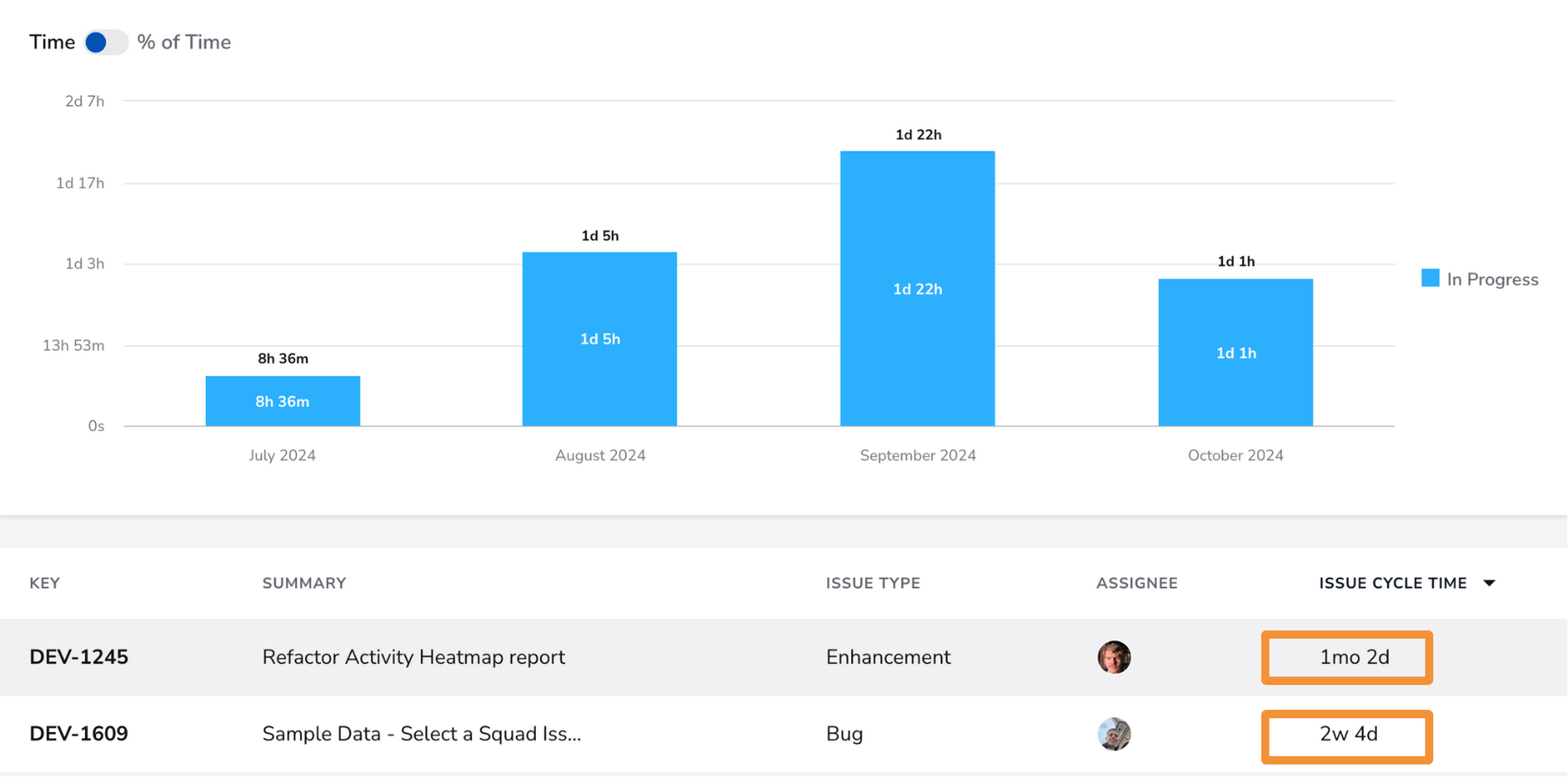
The image below displays the issue cycle time breakdown for tasks in the "In Progress" status. Additionally, we've sorted the list to show the tasks with the longest time in this status by clicking on the "Issue Cycle Time" column header.
3. Limit Work in Progress (WIP)
Limit the number of tasks in "In Progress" to prevent multitasking overload. Keeping WIP manageable enhances focus, leading to faster task completion and improved work quality.
4. Improve Hand-offs and Collaboration
Streamline transitions by setting clear criteria for moving tasks forward and enhancing team collaboration. Smooth hand-offs reduce delays, clear blockers, and help workflow efficiently across stages.
5. Regularly Review and Adjust
Use cycle time data to pinpoint stages where delays occur, allowing for targeted improvements. Regular reviews enable dynamic adjustments to priorities, processes, or resource allocation to minimize cycle time.
Applying These Principles
By incorporating these best practices, teams can use the dashboard to dynamically manage workflows and adjust priorities based on high-impact areas that reduce cycle time. Promoting a Completion Culture encourages teams to focus on finishing work efficiently and effectively, enhancing overall productivity.