Overview
Running Scrum well requires more than completing tickets. Teams need to understand how accurately they plan, how much work gets added mid-sprint, whether commitments align with capacity, and whether execution is on track. DevStats brings these insights together across a set of reports designed specifically for Scrum teams.
This use case shows how DevStats helps teams review past sprints, improve commitmentreliability, identify patternslike frequent carryover or mid-sprint additions, support real-time decision making during execution, and reinforce Scrum discipline.
When to Use This
This use case is relevant when your team experiences challenges such as:
- Frequent carryover from one sprint to the next
- Tasks being added after sprint start
- Sprints becoming unpredictable or inconsistent
- Daily Scrums turning into status meetings instead of problem-solving
- Low visibility for stakeholders on what the team can deliver
- Difficulty understanding why sprints fail or succeed
If any of these symptoms are present, the Scrum process is not functioning as intended, and DevStats helps reveal the root causes.
How Teams Apply This Use Case
Before the Sprint
In this stage, teams should review past performance trends to define more realistic commitments.
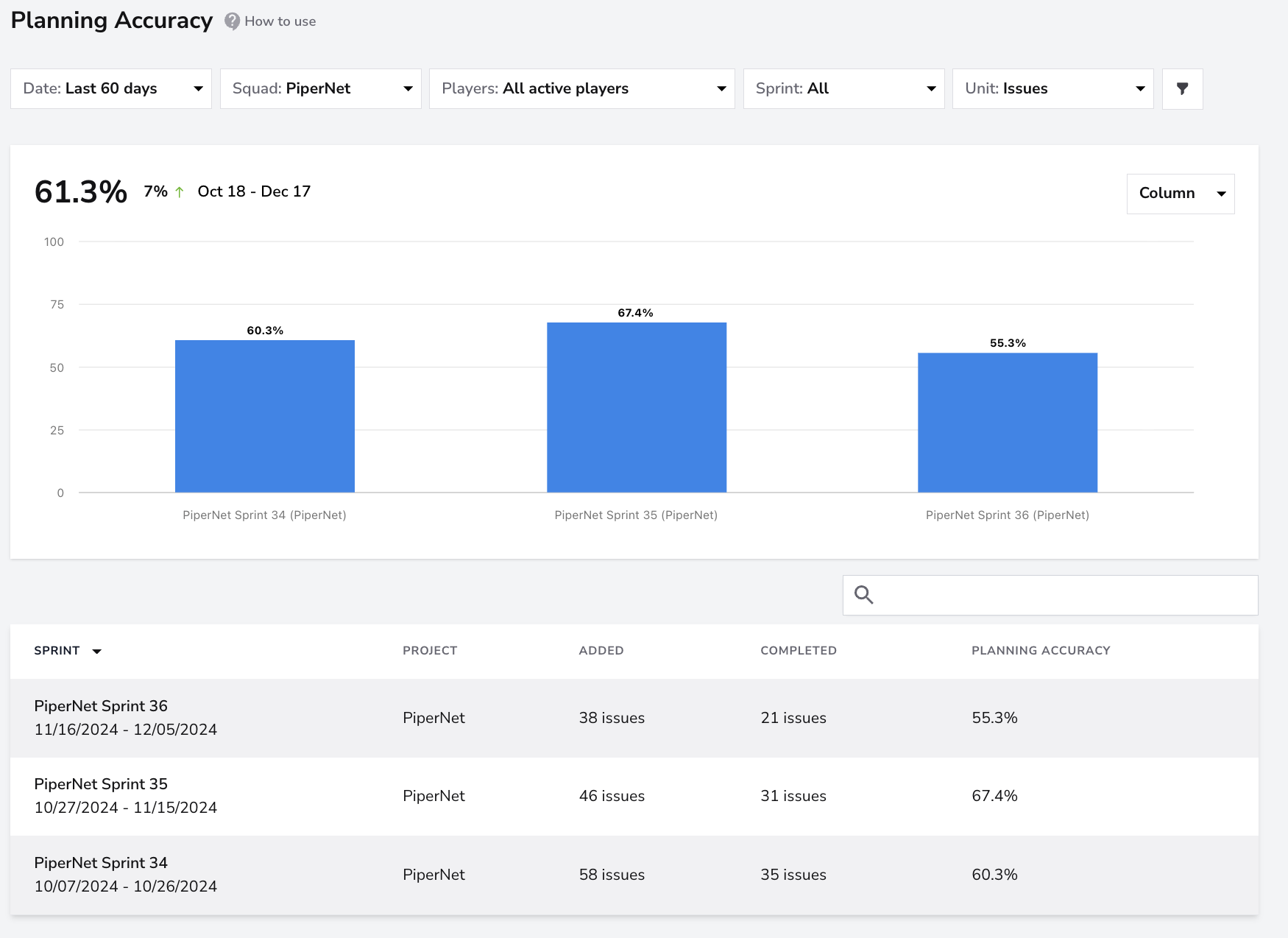
Planning Accuracy provides insight into the team’s historical reliability and helps set expectations that match capacity.
During the Sprint
In this stage, the team is focused on the tasks currently in progress.
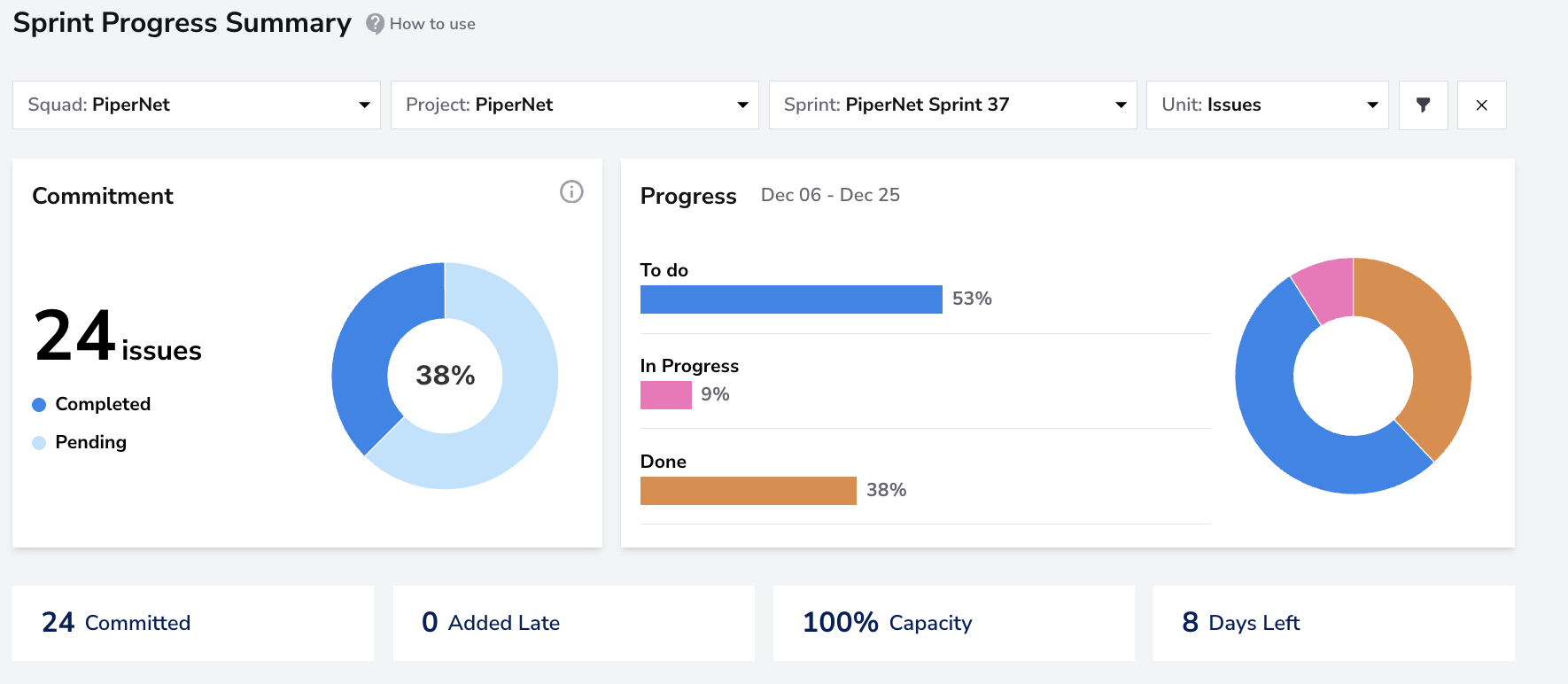
Sprint Progress Summary gives a real-time view of execution, enabling the team to identify blockers early, adjust priorities, and keep the sprint healthy while it is happening. Daily Scrum becomes more focused and actionable.
After the Sprint
In this stage, the team reviews the sprint that just ended. Sprint impact becomes the anchor for the retrospective, helping the team understand what disrupted the sprint, how much work carried over, and the role of unplanned tasks.
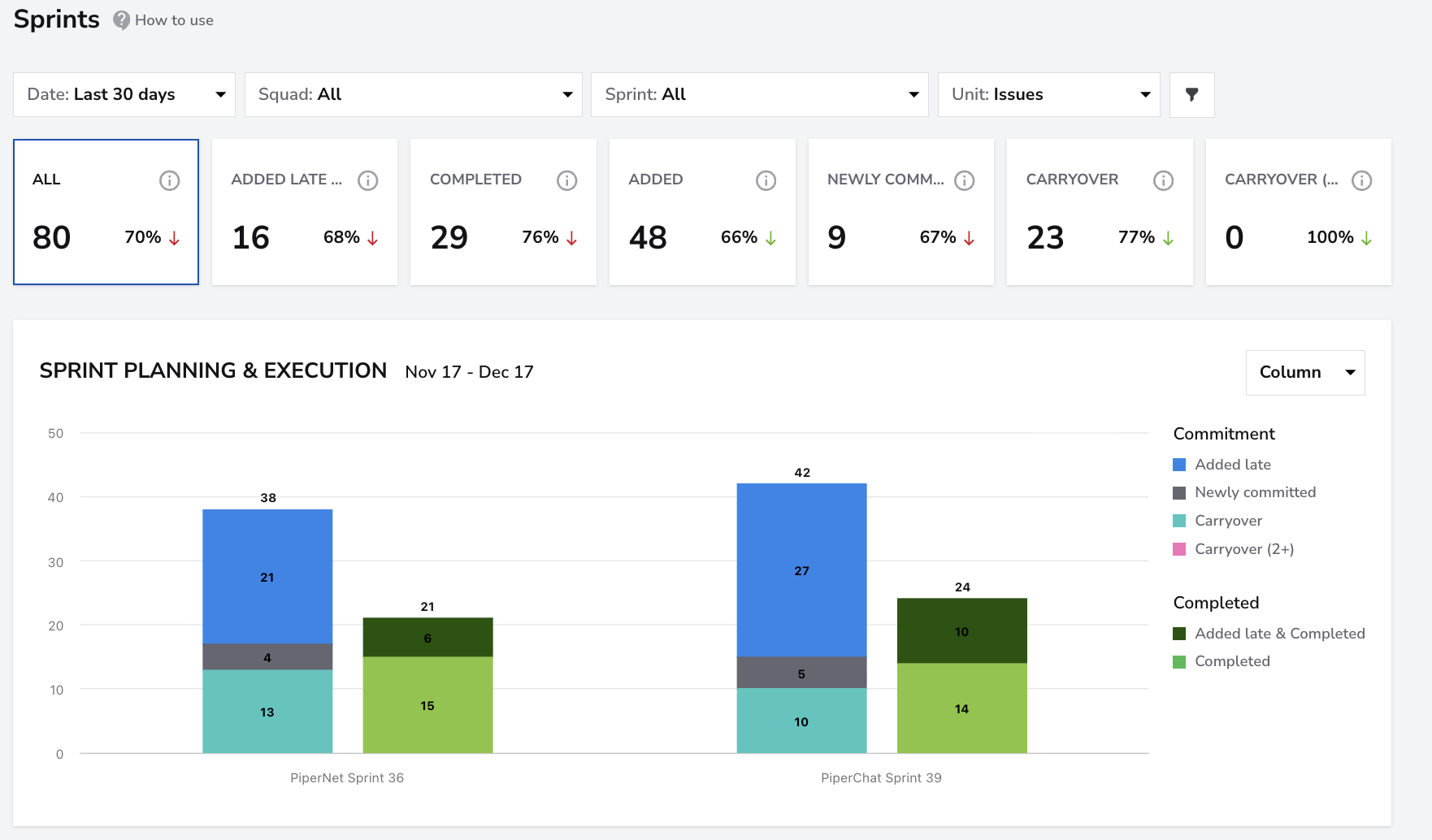
Teams can also combine these insights with Planning Accuracy to better prepare for the next sprint, ensuring commitments are more realistic and aligned with historical performance. This step focuses on identifying patterns, discussing root causes, and defining what the team will improve in the upcoming cycle.
This cycle repeats every sprint, creating a feedback loop where teams continuously test new strategies, measure their impact, and iterate on their process, using data instead of guesswork.
Summary
DevStats helps teams run better sprints by giving clear visibility before, during, and after each cycle. With insights from Sprint Impact, Planning Accuracy, and Sprint Progress Summary, teams can plan more realistically, follow their progress in real time, and use retrospectives to make meaningful improvements. This use case supports teams in making Scrum more consistent, predictable, and effective.