Understanding how your team allocates its development efforts is essential for optimizing productivity, maintaining code quality, and reducing technical debt. By analyzing the Work Breakdown Dashboard, teams can identify patterns in how they spend their time on new features, refactoring, and reworking code.
This guide will walk you through how to use these insights to improve development practices.
Step 1: Balance New Code with Refactoring
- How:Regularly review the distribution between New Code and Refactoring work types. A healthy balance ensures that while innovation continues through new features, the codebase remains maintainable and high-quality through ongoing refactoring.
- What to Look For: A high percentage of new code with minimal refactoring may indicate that the team is prioritizing new features at the expense of code quality. Conversely, excessive refactoring with limited new code could slow down feature delivery.

Action: Schedule regular sprint cycles dedicated to refactoring to maintain a clean, efficient codebase while continuing to innovate with new features.
Step 2: Monitor Rework Levels
- How: Pay attention to the percentage of Rework in the work breakdown. Rework involves revisiting recent code changes to make adjustments or fix issues.
- What to Look For: High levels of rework could signal problems with initial implementation, unclear requirements, or inadequate testing. This pattern indicates that development processes may need adjustments to reduce inefficiencies.
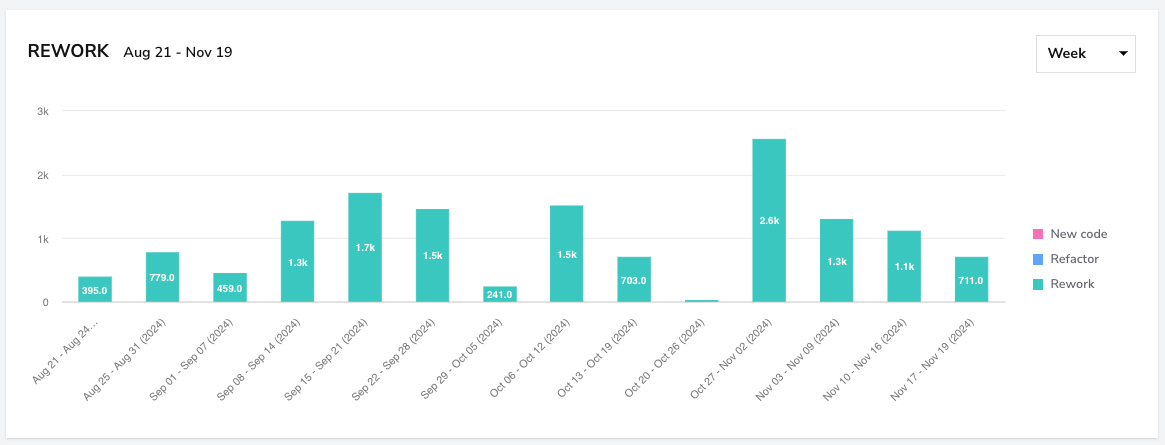
Action: Improve initial design clarity, enhance testing practices, and refine requirement gathering to minimize rework. Aim to identify and address root causes to reduce the need for rework over time.
Step 3: Prioritize Refactoring Legacy Code
- How: Identify and track Refactor metrics, focusing on code that has been in the codebase for more than 21 days. Regular refactoring prevents technical debt from accumulating and ensures that legacy code remains maintainable and high-performing.
- What to Look For:Low refactoring levels could indicate a growing backlog of technical debt. Addressing this can lead to better long-term productivity and reduced rework.
Action: Include refactoring in your sprint planning to maintain a healthy codebase. Ensure that team members understand the importance of refactoring to avoid future bottlenecks.
Conclusion: Best Practices for Managing Work Types
- Incorporate Refactoring into Sprint Cycles: Dedicate time in each sprint to refactor legacy code and improve code structure.
- Reduce Rework through Better Planning: Invest in thorough planning and requirement gathering to reduce errors and unnecessary revisions.
- Encourage Team Collaboration: Ensure that all team members are aligned on the definitions and goals of each work type, fostering balanced development efforts and shared responsibility.